Ford Focus RS · Mk3 RS
Ford Focus RS: the hot hatch with a wild side
A manual gearbox, turbo power and all-wheel drive make the Mk3 RS very different from a Focus ST. It is practical, but its sharper personality comes with trade-offs.
4 min read · Updated 2026-10-12
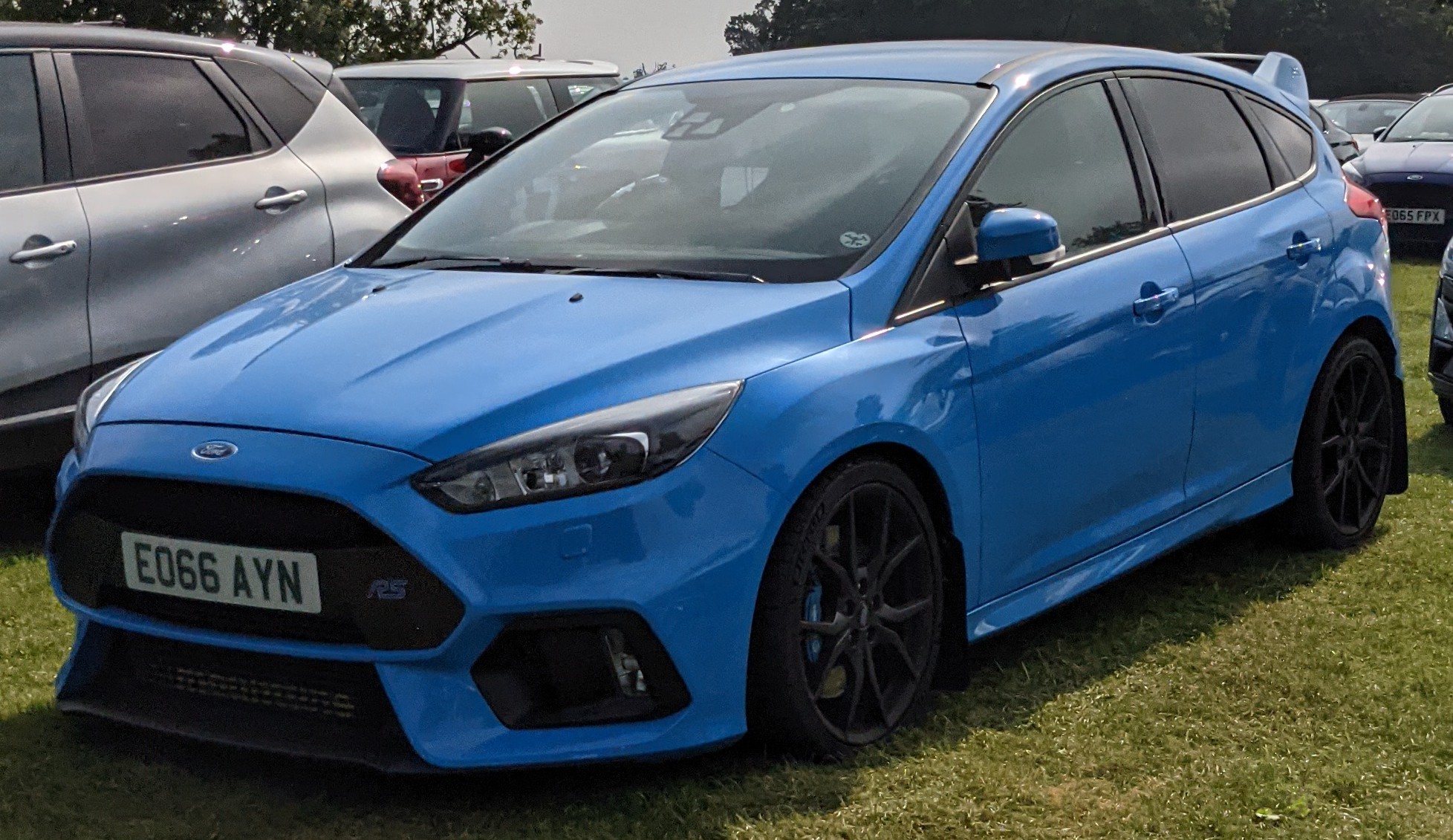
- Engine
- 2.3-liter turbocharged four-cylinder
- U.S. output
- 350 hp / 350 lb-ft
- Drivetrain
- All-wheel drive
- Transmission
- 6-speed manual only
The Focus RS is for the person who wants useful back seats and a hatch, but still wants the car to feel like an event. Its turbocharged engine and all-wheel-drive system make it a different proposition from the front-wheel-drive ST. There is no automatic option here, so be honest about whether you want a clutch pedal in daily traffic.
Its enthusiast following makes stock examples especially worth a look. That does not mean every modified car is bad; it means a list of parts is not a substitute for records, careful installation and a specialist inspection.
What makes the RS different?
The North American Mk3 RS was sold for 2016–2018. Ford rated its 2.3-liter EcoBoost at 350 horsepower and 350 lb-ft of torque. It combines a six-speed manual with an all-wheel-drive system and selectable driving modes, including launch control and a dedicated Drift Mode. Treat those features as reasons to inspect usage history, not as a guarantee of a gently used car.
Do not confuse European 350 PS figures with U.S. horsepower ratings when comparing specifications. Also check that the listing really describes an RS: a Focus with a body kit or aftermarket badges is not enough. RevFinder uses the Focus model with the RS trim rather than treating every Focus as a performance car.
Should you pay more for a 2018?
The 2018 North American limited edition added a mechanical Quaife front limited-slip differential. That is a meaningful hardware difference, but it does not make earlier cars unworthy. For a road car, condition and maintenance may be more valuable than paying extra for the final-year specification.
Compare examples with similar mileage and history before deciding. An expensive special edition still needs good tires, healthy brakes and evidence of sensible ownership.
Daily use: try the ordinary drive first
Test the seat fit, parking visibility and ride on the roads you actually use. A car that feels exciting for ten minutes may feel tiring over a longer commute. Try the infotainment, air-conditioning and rear-seat space rather than assuming the hatchback shape settles every practicality question.
Budget for four matching, suitable tires and investigate the service requirements for the drivetrain. All-wheel drive does not remove the need for good tires or sensible driving in poor weather.
Your pre-purchase checklist
Ask a Ford dealer to check the VIN for outstanding recalls and service campaigns, and request paperwork for any completed engine or cooling-system work. Have an independent specialist inspect a car with an unknown tune or unexplained coolant loss before discussing a deposit.
- Start the engine cold; check for smoke, leaks and warning lights.
- Verify smooth clutch operation and shifts through every gear.
- Inspect brakes, wheels and underside damage, especially on lowered cars.
- Request the tune, fuel requirements and supporting modifications in writing.
- Confirm maintenance records rather than relying on the seller saying it was always serviced.
Who is it for?
Choose the RS if you want a manual performance hatch with an extroverted character and can accept a firmer daily experience. If comfort or purchase cost comes first, the Focus ST and Golf GTI are sensible comparisons. The best choice is the car you will enjoy on a normal Tuesday, not just at a meet.
Sources
RevFinder verdict
RevFinder pick: a stock or carefully documented RS with a specialist inspection and verified service history. A clean 2016–2017 can be a smarter buy than a neglected 2018.
This guide is educational, not a substitute for a vehicle-history report or an independent pre-purchase inspection. Specifications can vary by year, trim and market.